

Common Spanish Grammar Mistakes to Avoid

Learning Spanish can be a rewarding experience, but many learners encounter common grammar mistakes that can hinder their progress. This article aims to highlight these frequent errors, providing practical tips to help beginners and older learners avoid them. By understanding the nuances of Spanish grammar, you can enhance your communication skills and build confidence in your language abilities. We will explore common verb conjugation errors, gender and number agreement mistakes, preposition usage issues, and spelling and accent mistakes. Each section will offer insights and examples to clarify these concepts, ensuring you have the tools needed to improve your Spanish grammar.
What Are the Most Frequent Spanish Verb Conjugation Errors?
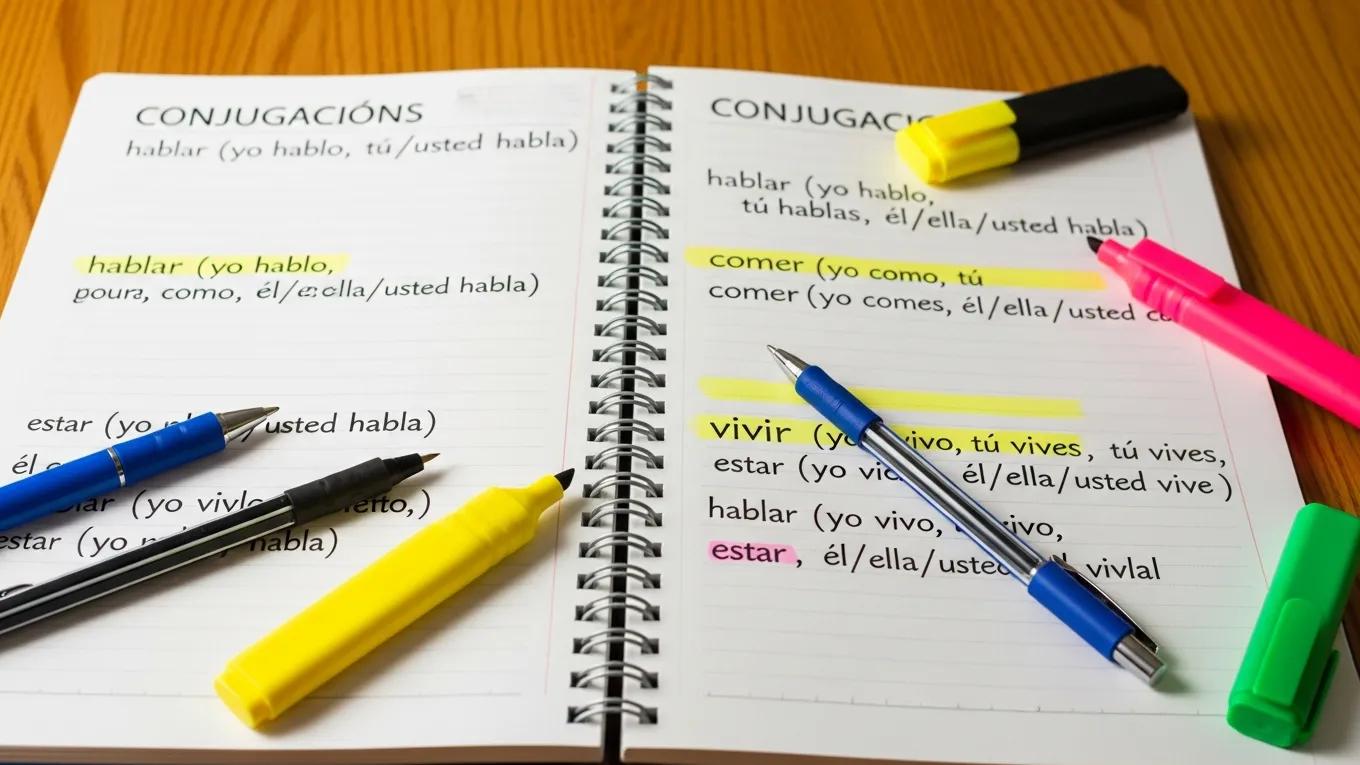
Verb conjugation is a fundamental aspect of Spanish grammar, and many learners struggle with it. Common errors often arise from misunderstanding verb endings and the various tenses used in the language. Incorrect verb conjugation can lead to confusion in meaning, making it essential to grasp these concepts early in your learning journey. By identifying and correcting these mistakes, you can significantly improve your fluency and comprehension.
Indeed, specific verb constructions, such as Spanish psychological verbs, present unique challenges for English-speaking learners due to structural differences.
Common Errors in Spanish Psych Verbs for English Speakers
The Spanish psychological verb construction seems to be especially difficult for native English-speaking learners to acquire. Since some of the most common Spanish psych verbs, such as “gustar” (to please) and “encantar” (to delight), require a grammatical structure that is different from that of the English verbs frequently taken as their equivalents “to like” and “to love,” it is understandable that native English speakers may struggle with the construction. This study presents data that describe the patterns of usage of students (n=105) in first-, second-, third-, and fourth-semester university-level Spanish courses. Each completed three descriptive writing tasks, which were analyzed for error patterns. Analysis identified three major error types: omission of preposition “a” (to) when inclusion is required; several object pronoun errors; and verb morphology errors. Results suggest that learners initially commit errors related to transfer of structures from the first language.
Gender agreement in adult second language learners and Spanish heritage speakers: The effects of age and context of acquisition, S Montrul, 2008
How Do Incorrect Verb Endings Affect Spanish Sentence Meaning?
Incorrect verb endings can drastically change the meaning of a sentence in Spanish. For instance, the verb (to speak) can be conjugated in various forms, such as (I speak) or (he/she speaks). If a learner mistakenly uses when they mean to say , it can lead to misunderstandings. Therefore, mastering verb endings is crucial for clear communication.
Which Verb Tenses Are Commonly Confused by Beginners?
Beginners often confuse several verb tenses, particularly the present and preterite tenses. For example, the present tense (I eat) may be confused with the preterite (I ate). This confusion can lead to incorrect statements about when actions occurred. Understanding the context in which each tense is used will help learners avoid these common pitfalls.
How Can You Prevent Gender and Number Agreement Mistakes in Spanish?
Gender and number agreement is another area where learners frequently make mistakes. In Spanish, nouns and adjectives must agree in gender (masculine or feminine) and number (singular or plural). Failing to adhere to these rules can result in grammatically incorrect sentences, which can be confusing for both the speaker and the listener.
What Are the Rules for Matching Nouns and Adjectives in Gender and Number?
To ensure proper agreement, it is essential to know the gender of nouns and how to modify adjectives accordingly. For example, (the red car) uses a masculine noun and adjective, while (the red house) uses a feminine noun and adjective. By practicing these rules, learners can avoid common mistakes and enhance their grammatical accuracy.
Which Gender Agreement Errors Are Most Common Among Older Learners?
Older learners may struggle with gender agreement due to differences in their native language structures. Common errors include using masculine forms for feminine nouns or vice versa. To overcome these challenges, older learners should focus on consistent practice and exposure to correct usage in context, such as through reading and conversation.
Research confirms that adult learners, particularly those learning Spanish as a second language, frequently encounter difficulties with gender agreement, especially with nouns whose gender is not immediately obvious.
Gender Agreement Errors in Adult Spanish L2 Learners
This study investigates knowledge of gender agreement in Spanish L2 learners and Spanish heritage speakers. The results showed that the L2 learners made around 20% gender agreement errors, whereas the heritage speakers made around 10% gender agreement errors. The L2 learners were more accurate with nouns that had transparent gender (e.g., ending in -o or -a) than with nouns that had opaque gender (e.g., ending in -e or a consonant).
Gender agreement in adult second language learners and Spanish heritage speakers: The effects of age and context of acquisition, S Montrul, 2008
What Are Typical Spanish Preposition Usage Errors and How to Fix Them?
Prepositions in Spanish can be tricky, as their usage often differs from English. Many learners make mistakes by directly translating prepositions from their native language, leading to incorrect phrases and confusion in meaning. Understanding the correct usage of prepositions is vital for clear communication.
How Do Preposition Mistakes Change the Meaning of Spanish Sentences?
Mistakes with prepositions can alter the intended meaning of a sentence. For example, saying (I am going to the house) is correct, while (I am going home) conveys a different message. Recognizing the nuances of preposition usage will help learners communicate more effectively.
Which Prepositions Are Most Often Misused by Spanish Learners?
Commonly misused prepositions include and , which both translate to “for” in English but have different applications. is often used to express reasons or causes, while indicates purpose or destination. Familiarizing oneself with these distinctions can prevent frequent errors.
The notorious difficulty of distinguishing between ‘por’ and ‘para’ is well-documented, prompting ongoing research into the most effective teaching strategies for these prepositions.
Effective Teaching Strategies for Spanish Por and Para
AbstractWhile applying cognitive linguistics (CL) to language teaching has been proven effective for teaching polysemous prepositions in English, it has demonstrated less success with the difficult-to-acquire Spanish prepositionsporandpara. This points to the need for more practical research investigating if and how CL might be effective for this particular target, especially given that conventional instruction has been found to be lacking. The current study compared three instructional conditions in intact intermediate Spanish classes.
More evidence that a usage-based, applied cognitive linguistics approach is effective for teaching the
Spanish prepositions por and para, EM Kissling, 2024
Which Common Spanish Spelling and Accent Mistakes Should Beginners Avoid?
Spelling and accent marks are crucial in Spanish, as they can change the meaning of words entirely. Beginners often overlook these details, leading to misunderstandings and miscommunication. By paying attention to spelling and accentuation, learners can improve their writing and speaking skills.
How Do Accent Marks Affect Spanish Word Meaning and Pronunciation?
Accent marks in Spanish indicate which syllable should be stressed when pronouncing a word. For example, (potato) and (dad) have different meanings due to the accent mark. Understanding the role of accent marks is essential for proper pronunciation and comprehension.
What Are Frequent Spelling Errors in Spanish and How Can You Correct Them?
Common spelling errors include confusing and , as well as mixing up and in certain contexts. To correct these mistakes, learners should practice writing and reading in Spanish regularly, paying close attention to the correct spelling of words. Utilizing resources like online courses can also provide valuable practice and feedback.
By addressing these common Spanish grammar mistakes, learners can enhance their language skills and communicate more effectively. For those looking to improve their Spanish further, Hello To Spanish offers a range of online courses designed to help beginners and older learners build confidence in their language abilities. With practical lessons and expert guidance, you can avoid these pitfalls and achieve your language goals.